
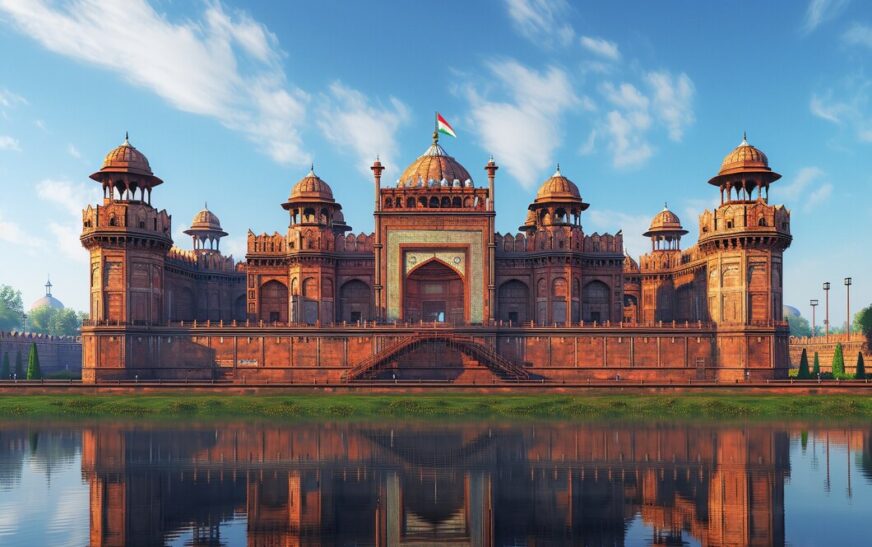
![Beyond the Battlements: Discovering the Secret Lives of India’s Royal Citadels [Updated-2026]](https://traveloinfo.com/wp-content/uploads/2025/10/a5-872x547.jpg)
Beyond the Battlements: Discovering the Secret Lives of India’s Royal Citadels
The common narrative of India’s forts is one of battles and bravery, of kings and conquests. We see them as military strongholds—stone sentinels standing guard over history’s battlefields. But this perspective misses the true essence of these magnificent structures. Behind every fortified wall lies a hidden world, a complex ecosystem where life flourished in all its richness and complexity.
These royal citadels were not just military installations; they were living, breathing cities within cities. They were centers of art, culture, administration, and daily life. To truly understand them, we must look beyond the battlements and discover the secret lives that pulsed within their stone walls.
The Hidden Cities: More Than Military Might
The Self-Sufficient Universe
India’s great forts were marvels of urban planning, designed to sustain life through extended sieges while maintaining the cultural and administrative functions of a capital city.
Water Management Genius:
-
Rani ki Vav in Patan and other stepwells weren’t just architectural marvels—they were sophisticated water harvesting systems
-
Golconda Fort’s hydraulic system could supply water for a year-long siege
-
Mehrangarh’s multiple tanks and reservoirs collected monsoon water
-
Underground channels and filtration systems that predated modern engineering
Agricultural Innovation:
-
Terraced farming within fort complexes
-
Specialized gardens for medicinal plants
-
Grain storage systems that could feed thousands for months
-
Animal husbandry areas for dairy and transportation needs
Economic Ecosystems:
-
Internal markets and trading areas
-
Craftsmanship zones for weapons, textiles, and art
-
Minting facilities for currency
-
Administrative centers for tax collection and governance
The Social Architecture
The layout of these forts reveals sophisticated understanding of social organization:
Vertical Social Stratification:
-
Royal quarters at the highest points for security and climate control
-
Administrative zones at middle levels
-
Military barracks and training grounds strategically positioned
-
Artisan quarters and markets in accessible areas
-
Temple complexes serving as spiritual and social centers
Climate-Responsive Design:
-
Jharokhas (overhanging balconies) for air circulation
-
Jaalis (lattice screens) for temperature control and privacy
-
Water channels running through palaces for natural cooling
-
Strategic orientation to maximize breeze and minimize sun exposure
The Cultural Crucibles: Where Art Met Armor
The Patronage Systems
Behind the defensive walls flourished some of India’s most exquisite art forms, funded by royal patronage that saw cultural investment as important as military strength.
Musical Legacies:
-
Gwalior Fort became the cradle of Dhrupad music
-
Royal musicians composed in spaces designed for perfect acoustics
-
Tabla and Sitar development in royal courts
-
The Senia Gharana of music originating in fort environments
Architectural Poetry:
-
Sheesh Mahal in Amber Fort – where mirrors created starry nights indoors
-
Mughal Gardens in Red Fort – Persian paradise recreated in stone
-
Rajasthani frescoes in Mehrangarh – telling stories in mineral pigments
-
Deccani art in Golconda – fusion of Persian and local styles
Literary Salons:
-
Royal libraries housing priceless manuscripts
-
Poets and scholars hosted in royal chambers
-
Multilingual inscriptions telling layered histories
-
Court historians documenting life beyond battles
The Craftsmanship Corridors
Each major fort developed specialized craft traditions:
Metalwork Masters:
-
Rajasthan’s koftgari (gold inlay on steel)
-
Bidar’s bidriware (silver inlay on black metal)
-
Delhi’s brass and copper work
-
Armor that doubled as art
Textile Traditions:
-
Mughal brocades and velvets
-
Rajasthani bandhani and block printing
-
Deccani silk weaving
-
Embroidery schools within palace quarters
The Women’s Quarters: Beyond Purdah and Privacy
The Zenana Dynamics
The women’s quarters were not just spaces of seclusion but centers of influence and administration.
Political Power Centers:
-
Queen mothers as regents and advisors
-
Royal women managing diplomatic correspondence
-
Marriage alliances negotiated by senior women
-
Educational institutions run by royal women
Cultural Patronage:
-
Mughal princesses commissioning art and architecture
-
Rajput women preserving folk traditions
-
Maratha queens building temples and water systems
-
Literary works authored by royal women
Economic Management:
-
Personal treasuries and investments
-
Management of agricultural lands
-
Supervision of craft production
-
Trade initiatives and commercial ventures
The Architectural Intelligence
Zenana design reflected sophisticated understanding of privacy and community:
Jharokha System: Allowed observation without visibility
Separate Courtyards: For different ranks and families
Private Gardens: For recreation and meditation
Secret Passages: For security and discreet movement
The Spiritual Sanctuaries: Where Gods Guarded Kings
Multi-Religious Harmony
Most forts housed diverse places of worship, reflecting the pluralistic nature of Indian royalty.
Co-existing Faiths:
-
Gwalior Fort with Hindu temples, Jain sculptures, and Islamic tombs
-
Golconda with mosques, temples, and churches
-
Red Fort with Diwan-i-Khas and Hayat Baksh Mosque
-
Amber Fort with Kali Temple and Muslim-inspired architecture
Royal Rituals:
-
Daily worship as state function
-
Temple kitchens feeding thousands
-
Religious festivals as public spectacles
-
Astrologers guiding royal decisions
The Sacred Geography
Fort placement often followed spiritual principles:
Vastu Shastra and Feng Shui principles in layout
Sacred mountains and rivers incorporated into design
Astrological alignment of gates and structures
Geomantic principles in orientation
The Knowledge Centers: Forts as Universities
Educational Ecosystems
Royal forts housed sophisticated learning environments:
Scriptoriums and Libraries:
-
Sanskrit and Persian manuscripts
-
Astronomical texts and instruments
-
Medical treatises and surgical tools
-
Mathematical and engineering works
Specialized Schools:
-
Military academies for strategy and combat
-
Administrative training for future officials
-
Language schools for diplomats
-
Artistic training for court artists
Scientific Innovation
Many forts were centers of technological advancement:
Astronomical Observatories: Like Jantar Mantar in Jaipur
Medical Research: Ayurvedic and Unani traditions
Military Technology: Cannon founding and gunpowder research
Agricultural Science: Crop rotation and irrigation studies
The Diplomatic Theaters: Where Nations Met
The Language of Power
Royal courts developed sophisticated diplomatic protocols:
Ambassadorial Receptions:
-
Elaborate greeting ceremonies
-
Gift exchange rituals
-
Multi-lingual translators
-
Cultural performances as diplomatic tools
Treaty Negotiations:
-
Symbolic seating arrangements
-
Ritualized communication forms
-
Marriage alliance discussions
-
Trade agreement formulations
The Cultural Diplomacy
Forts served as stages for international relations:
Architectural Statements: Displaying power through building
Artistic Commissions: Demonstrating cultural sophistication
Gift Economies: Establishing hierarchical relationships
Performance Spaces: Showcasing cultural wealth
The Living Legacy: Reading Between the Stones
How to See Beyond the Battlements
Modern visitors can discover these hidden stories through:
Architectural Literacy:
-
Understanding spatial organization
-
Reading symbolic decorations
-
Interpreting functional designs
-
Recognizing cultural fusion
Contextual Awareness:
-
Studying local oral histories
-
Examining peripheral structures
-
Noticing wear patterns
-
Understanding geographical context
The Continuing Relevance
These secret lives of forts teach us valuable lessons:
Urban Planning: Sustainable city design principles
Cultural Management: Pluralistic society organization
Crisis Management: Self-sufficient community design
Cultural Preservation: Balancing tradition and innovation
The Eternal Conversation
India’s royal citadels stand not as silent monuments to war, but as living textbooks of civilization. They teach us that true strength lies not just in military might, but in cultural richness, administrative wisdom, and social harmony. The same walls that protected kingdoms from invaders also protected artistic traditions, scientific knowledge, and spiritual practices.
When we look beyond the battlements, we discover that these stone structures were, in fact, delicate ecosystems where every aspect of human civilization found expression. They were microcosms of the ideal state—where protection and creation, security and freedom, tradition and innovation coexisted in careful balance.
The next time you stand before one of India’s magnificent forts, listen closely. Beyond the echoes of battles, you might hear the softer sounds of poetry being composed, see the ghostly movements of artists at work, sense the presence of administrators managing complex systems, and feel the spiritual energy that made these places not just strongholds, but sanctuaries of civilization.
![Best Places to Visit & Things To Do in Western Water Catchment, Singapore [Updated-2026]](https://traveloinfo.com/wp-content/uploads/2025/11/singapore10.avif)
![Best Places to Visit & Things To Do in Western Islands, Jurong Island and Bukom [Updated-2026]](https://traveloinfo.com/wp-content/uploads/2025/11/singapore8.avif)
![Best Places to Visit & Things To Do in Tuas, Singapore [Updated-2026]](https://traveloinfo.com/wp-content/uploads/2025/11/singapore7.avif)

![Where Stone Whispers: Listening to the Untold Stories of India’s Forts & Palaces [Updated-2026]](https://traveloinfo.com/wp-content/uploads/2025/10/landscape-south-africa-countryside-nature-earth_1253-762.jpg)
![The Guardian Walls: A Journey Through India’s Most Formidable Forts [Updated-2026]](https://traveloinfo.com/wp-content/uploads/2025/10/view-mexican-architecture-culture_23-2149749994.jpg)
![The Empire’s Echo: Walking the Corridors of Power in India’s Historic Capitals [Updated-2026]](https://traveloinfo.com/wp-content/uploads/2025/10/a7.jpg)