
![The Time-Traveler’s Tour: Walking Through Millennia at India’s Top Sites [Updated-2026]](https://traveloinfo.com/wp-content/uploads/2025/10/travel-concept-happy-tourist-woman-wearing-hat-sunglasses-ready-travel-with-suitcase-passport-isolated_231208-5639-872x547.jpg)
Introduction: Where History is Not a Subject, But a Sensation
In most places, history is confined to museums. In India, it’s the very ground you walk on. It’s in the air you breathe, the scent of old stone and desert dust. This is a land where millennia aren’t just remembered; they are palpably present.
For the traveler who longs for more than a vacation, India offers the ultimate journey: a walk through time itself. This guide is your portal. Leave the guidebook for a moment, and let’s listen to what the stones have to say.
1. Dholavira, Gujarat: The Dawn of Civilization (c. 3000 BCE)
Step Into: The mind of a Bronze Age urban planner.
Before the Pyramids of Egypt reached for the sky, the Indus Valley Civilization was building meticulously planned cities. Dholavira, rising from the white sands of the Rann of Kutch, is its masterpiece of survival.
-
What You’ll Feel: A sense of awe at ancient ingenuity. Walk through a city engineered with a complex water harvesting system of 16 reservoirs—a testament to human resilience in a harsh climate. See the world’s earliest signboard, its Indus script still undeciphered, a silent, mysterious greeting from 5,000 years ago.
-
The Time-Traveler’s Moment: Stand at the edge of the great reservoir at sunset. As the vast white desert turns to gold, you can almost hear the echoes of a bustling, sophisticated metropolis that mastered its environment.
2. Sanchi, Madhya Pradesh: Whispers of Enlightenment (c. 3rd Century BCE)
Step Into: The serene world of Emperor Ashoka’s Buddhism.
The Great Stupa at Sanchi is not a ruin; it’s a living, breathing monument of faith. Commissioned by the great Emperor Ashoka after he renounced war, it became a cornerstone of Buddhist art and architecture.
-
What You’ll Feel: Profound peace. Circumambulate the massive, hemispherical dome, a symbol of the Buddha’s enlightenment. Your eyes will be drawn to the magnificent toranas (gateways), covered in carvings that tell the stories of the Buddha’s life—not through words, but through beautiful, symbolic art.
-
The Time-Traveler’s Moment: Run your fingers over the cool stone of a pillar bearing Ashoka’s edict. You are touching the very words of an emperor who transformed his brutal reign into a message of peace and compassion, echoing through the centuries.
3. Khajuraho, Madhya Pradesh: A Cosmic Dance in Stone (c. 950-1050 CE)
Step Into: The philosophical and artistic zenith of the Chandela Dynasty.
The temples of Khajuraho are famous for their erotic sculptures, but to stop there is to miss the point entirely. They are a grand celebration of life itself—the spiritual and the material, the divine and the human, all intertwined.
-
What You’ll Feel: Wonder at the sheer audacity of the art. Every inch of these sandstone temples is carved with gods, goddesses, warriors, musicians, and mythical beings. The famous mithuna (amorous) figures represent the celebration of kama (desire) as a path to spiritual liberation.
-
The Time-Traveler’s Moment: Visit the Kandariya Mahadev Temple at dawn. As the first rays of the sun illuminate the intricate carvings, watch the stone seem to come alive, telling its timeless stories of passion, devotion, and the cosmic balance.
4. Hampi, Karnataka: The Empire of Ruins (c. 14th-16th Century CE)
Step Into: The epic scale of the Vijayanagara Empire, frozen in 1565 AD.
Hampi is not a site; it’s a landscape. A surreal, boulder-strewn terrain where the ruins of one of the world’s largest and richest cities lie scattered, telling a tale of glorious rise and abrupt fall.
-
What You’ll Feel: A powerful sense of melancholy and grandeur. Cycle from the still-active Virupaksha Temple to the iconic stone chariot of the Vittala Temple. Climb the Matanga Hill for a panoramic view that will steal your breath—acres of ancient structures framed by giant rocks and palm groves.
-
The Time-Traveler’s Moment: Sit in the Royal Enclosure at sunset. As the shadows lengthen across the Lotus Mahal and the Mahanavami Dibba, you can feel the ghost of the empire—the whispers of courtiers, the march of soldiers, the vibrant pulse of a capital that was suddenly silenced.
5. The Taj Mahal, Agra: A Tear on the Cheek of Time (Completed 1653 CE)
Step Into: The pinnacle of Mughal architecture and an eternal love story.
Every traveler knows the Taj Mahal. But to truly experience it, you must move past the postcard image and see it for what it is: a perfect, poetic elegy in marble.
-
What You’ll Feel: Awe, pure and simple. Observe how the white marble changes color with the mood of the sky. Appreciate the incredible pietra dura inlay work, where thousands of semi-precious stones are set into the marble with impossible precision to form flowing flowers and calligraphy.
-
The Time-Traveler’s Moment: See the Taj from Mehtab Bagh, the Moonlight Garden, across the Yamuna River. From this quiet, reflective spot, away from the crowds, you see the monument as it was intended—a perfect, solitary vision of beauty and grief, reflecting both the sky and the river.
Conclusion: Your Personal Pilgrimage Through Time
India’s history is not a linear path but a layered tapestry. In a single glance, you can see a 2,000-year-old stupa, a 500-year-old fort, and a modern city buzzing on the horizon. This is the magic of traveling here.
![Shiv Temple, Ghansoli, Navi Mumbai [Updated-2026]](https://traveloinfo.com/wp-content/uploads/2026/07/nerul.jpg)
![Hanuman Temple, Kharghar [Updated-2026]](https://traveloinfo.com/wp-content/uploads/2026/07/HANUMAN.jpg)

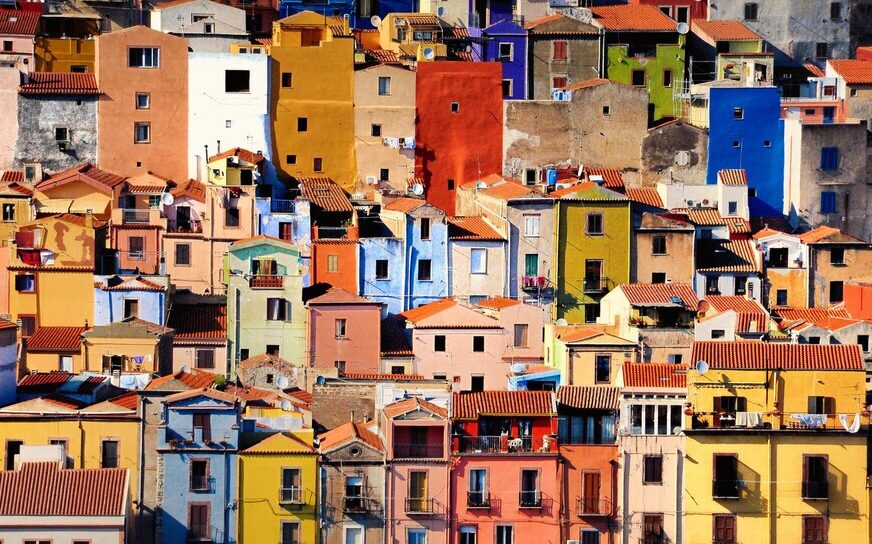
![India’s Greatest Hits: The Ultimate Bucket List for Every Type of Traveler [Updated-2026]](https://traveloinfo.com/wp-content/uploads/2025/10/a1.jpg)
![Beyond the Postcard: Discovering the True Soul of India’s Top Destinations [Updated-2026]](https://traveloinfo.com/wp-content/uploads/2025/10/a39.jpg)
![The Curated India: A Local’s Guide to the Country’s Can’t-Miss Gems [Updated-2026]](https://traveloinfo.com/wp-content/uploads/2025/10/guangzhou-china-jan-7-2015-guangzhou-cbd-view-twilight-view_1137-306.jpg)
![From Serene to Sensational: The Many Faces of India’s Must-See Places [Updated-2026]](https://traveloinfo.com/wp-content/uploads/2025/10/a7.jpg)