
![More Than Rituals: Uncovering the Philosophy at the Heart of India’s Religions [Updated-2026]](https://traveloinfo.com/wp-content/uploads/2025/10/a17-872x547.jpg)
More Than Rituals: Uncovering the Philosophy at the Heart of India’s Religions
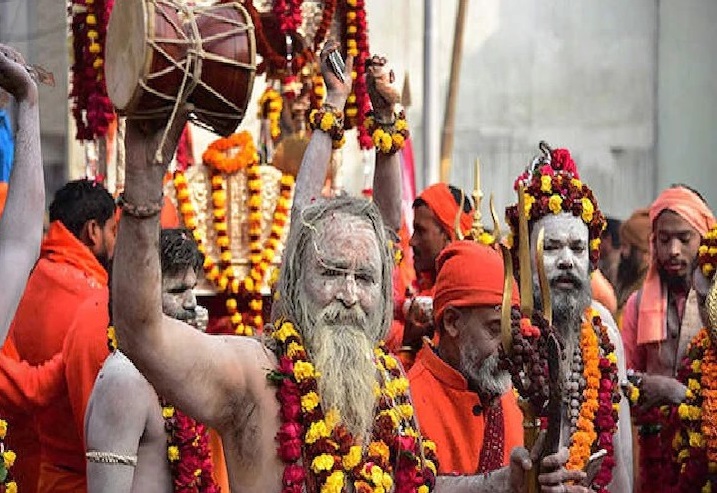
The world knows the vibrant, chaotic, and beautiful external face of Indian spirituality. It sees the million-strong Kumbh Mela, the rhythmic chants of the Ganga Aarti, the rhythmic bowing in prayer at a mosque, the selfless service in a Gurdwara langar. These rituals are the body of faith—visible, tangible, and awe-inspiring.
But what is the soul that animates this body?
Beneath the surface of these practices lies a deep, intricate, and profoundly sophisticated world of philosophy. To see Indian religions only as a set of rituals is like judging a great novel by its cover. This is an invitation to move beyond the periphery and uncover the philosophical heart that has pulsed for millennia, addressing the most fundamental questions of human existence.
The Foundational Soil: The Concept of Dharma
Before we explore individual traditions, we must understand the ground they grow from: Dharma.
Often simplistically translated as “religion” or “duty,” Dharma is a far richer concept. It derives from the Sanskrit root “dhri,” meaning “to uphold” or “to sustain.” Dharma is the eternal principle that upholds the cosmic and social order. It is the law of being, the essential nature of a thing.
A river’s dharma is to flow. The sun’s dharma is to shine. A human’s dharma is to live in accordance with their highest truth and purpose (svadharma). This is not a rigid, one-size-fits-all set of rules, but a contextual, dynamic guide for righteous living. The pursuit of understanding and living one’s dharma is the central quest that unifies the diverse spiritual traditions of India.
The Hindu Worldview: The Cosmic Play of Brahman and Atman
Hinduism, with its vast pantheon of deities, can seem bewildering. But the philosophy behind it offers one of the most coherent and mind-expanding models of reality.
1. The One and the Many: Brahman and the Gods
The ultimate reality in Hindu philosophy is Brahman. It is the singular, formless, impersonal, and all-pervading cosmic spirit. It is existence, consciousness, and bliss (Sat-Chit-Ananda). It is beyond name, form, or description.
So, what are the 33 million gods? They are not separate, competing deities in the Western sense. They are manifestations of the one Brahman. They are facets of the same diamond, accessible forms through which the human mind can comprehend and relate to the infinite. Praying to Shiva or Vishnu is not worshiping a different god, but focusing on a particular aspect of the divine whole—be it the transformative power or the sustaining energy. This is a profoundly philosophical monotheism expressed through a polytheistic framework.
2. The Divine Within: The Atman
If Brahman is the universal ocean, then the Atman is the individual drop of water. The core teaching of the Upanishads is the majestic declaration: “Tat Tvam Asi” – “Thou art That.” The individual soul (Atman) is not separate from the universal soul (Brahman).
Our fundamental ignorance (Avidya) makes us feel separate, creating the ego (Ahamkara) and binding us to the cycle of suffering. The entire spiritual journey, therefore, is the process of realizing this non-dual truth, of recognizing our own divine nature.
3. The Engine of the Universe: Karma and Samsara
The laws of Karma (action) and Samsara (the cycle of rebirth) are not a system of punishment and reward, but a cosmic law of cause and effect, as neutral and inevitable as gravity. Every thought, word, and deed has a consequence that shapes our future experiences across lifetimes.
The goal is not to “earn” a good afterlife, but to break free from the cycle altogether. Samsara is seen as a place of suffering (Dukkha) born from attachment and ignorance. Liberation (Moksha) is the release from this cycle, the realization of one’s true nature as the Atman, and union with Brahman.
The Buddhist Revolution: The Path to End Suffering
Born from the soil of Hindu thought, Buddhism, founded by Siddhartha Gautama (the Buddha), did not reject the core concepts of Karma and Samsara but refined them with a razor-sharp, pragmatic focus.
The Central Diagnosis: The Four Noble Truths
The Buddha was a spiritual physician. His philosophy is a diagnosis and a cure for the universal human condition of suffering (Dukkha).
-
The Truth of Suffering (Dukkha): Life inherently involves suffering—not just pain, but also dissatisfaction, impermanence, and discontent.
-
The Truth of the Cause of Suffering (Samudaya): The cause of suffering is craving (Tanha)—desire for pleasure, aversion to pain, and attachment to a false sense of self.
-
The Truth of the End of Suffering (Nirodha): It is possible to end suffering by eliminating its cause: craving.
-
The Truth of the Path to the End of Suffering (Magga): The way to end suffering is the Noble Eightfold Path.
The Philosophical Shift: Anatman (No-Self)
This is where Buddhism makes its most radical departure. The Buddha challenged the permanent, unchanging Hindu concept of the Atman. He proposed the doctrine of Anatman (No-Self).
He argued that what we call the “self” is merely a temporary combination of five aggregates (Skandhas): form, sensation, perception, mental formations, and consciousness. There is no permanent, independent “soul” within this ever-changing flow. Our suffering arises from clinging to this illusion of a separate, permanent self. Enlightenment (Nirvana) is the extinguishing of the fires of greed, hatred, and delusion, and the realization of this empty, interdependent nature of all reality.
The Sikh Synthesis: Devotion and Social Justice
Sikhism, which emerged in the 15th century, beautifully synthesizes elements of Hindu Bhakti (devotion) and Islamic Sufism (mysticism) into a unique, robust philosophy.
The One God and the Teacher
Sikhism is strictly monotheistic, believing in one formless, timeless God (Ik Onkar). It emphasizes the grace of the Guru. The lineage of the ten human Gurus is seen as a single light passed through ten vessels, culminating in the eternal Guru, the Guru Granth Sahib (the scripture).
The Philosophy of Action and Equality
Two core philosophical pillars define the Sikh way of life:
-
Naam Japna: The meditation on and remembrance of God’s name. This is the inner, devotional practice.
-
Kirat Karo: Earning an honest living through hard work and integrity. This sanctifies daily life.
-
Vand Chhakko: Sharing your earnings and resources with the community. This is the social imperative.
This triad creates a holistic philosophy that rejects ascetic withdrawal from the world. Instead, it advocates being a “saint-soldier” (Sant-Sipahi)—a spiritually aware individual who is actively engaged in the world, fighting for justice and serving humanity. The langar (free community kitchen) is the ultimate expression of this philosophy, breaking all barriers of caste, creed, and class.
The Jain Path of Radical Non-Violence
Jainism takes the principle of Ahimsa (non-violence) to its most logical and radical extreme. Its philosophy is a rigorous path of self-purification.
The Anekantavada: The Philosophy of Multiple Viewpoints
One of Jainism’s most profound contributions is the doctrine of Anekantavada, often illustrated by the parable of the blind men and the elephant. It states that reality is complex and can be perceived from multiple angles, and no single perspective holds the complete truth.
This is not moral relativism, but an intellectual humility that inherently promotes tolerance and dialogue. It philosophically dismantles the basis for dogmatism and fundamentalism.
The Goal: Freedom from Karmic Matter
Jains believe that the soul (Jiva) is trapped in a cycle of rebirth due to karmic particles that stick to it through actions driven by passion. Liberation (Kaivalya) is achieved by burning away these karmic particles through extreme asceticism, strict non-violence (in thought, word, and deed), and meticulous discipline.
The Common Thread: The Inner Journey
Despite their differences, a powerful unifying philosophy runs through these traditions:
-
The Primacy of Experience: All emphasize that true knowledge is not intellectual assent to a dogma, but direct, personal experience (Anubhava). The scriptures are a map, but you must take the journey yourself.
-
The Law of Cause and Effect: The concept of Karma (understood slightly differently in each) provides a coherent ethical framework for the universe, emphasizing personal responsibility.
-
The Goal of Liberation: Whether it’s called Moksha, Nirvana, or Kaivalya, the ultimate goal is freedom—from ignorance, from the cycle of suffering, and from the limited ego.
-
The Ethic of Compassion: The logical outcome of understanding the interconnectedness of all life (whether through Atman-Brahman, interdependence, or the pervasive Jiva) is universal compassion and non-violence.
Conclusion: From Outer Form to Inner Transformation
The rituals, the festivals, the pilgrimages—they are not the end goal. They are the vessels, the tools, the beautiful and necessary poetry of faith designed to lead the mind inward. They are the kindergarten for the soul, preparing it for the profound university of philosophical inquiry and meditative realization.
The true heart of India’s religions is not in the external performance, but in the internal transformation. It is a call to look within, to question, to meditate, and to realize the timeless truths about who we are and what our place is in this vast, mysterious, and magnificent universe.
The philosophy is the compass; the ritual is the first step on the path. And the destination is nothing less than the realization of our own true, boundless nature.
![Shiv Temple, Ghansoli, Navi Mumbai [Updated-2026]](https://traveloinfo.com/wp-content/uploads/2026/07/nerul.jpg)
![Hanuman Temple, Kharghar [Updated-2026]](https://traveloinfo.com/wp-content/uploads/2026/07/HANUMAN.jpg)

![Religious place in Mumbai, Maharashtra [Updated-2025]](https://traveloinfo.com/wp-content/uploads/2025/02/Siddhivinayak-Temple-Mumbai.jpg)
![Religious place in Delhi [Updated-2025]](https://traveloinfo.com/wp-content/uploads/2025/02/lotus-temple-DELHI.jpg)
![Religious place in Bangalore, Karnataka [Updated-2025]](https://traveloinfo.com/wp-content/uploads/2025/02/ISKCON-Temple-in-Bangalore.jpg)
![Religious place in Hyderabad, Telangana [Updated-2025]](https://traveloinfo.com/wp-content/uploads/2025/02/jagannath-temple-hyderabad.jpg)