
![New Delhi City Guide: Where To Go, Stay, Eat, And shop in India’s best city. [Updated-2025]](https://traveloinfo.com/wp-content/uploads/2025/02/delhi-f-872x516.jpg)
New Delhi City Guide: Where To Go, Stay, Eat, And shop in India’s best city.
New Delhi, the capital of India, is a vibrant metropolis that serves as the political, cultural, and economic heart of the country. It is one of the 11 districts of the National Capital Territory of Delhi (NCT) and is known for its rich history, diverse culture, and modern infrastructure. New Delhi was designed by British architects Sir Edwin Lutyens and Sir Herbert Baker and officially became the capital of India in 1931, replacing Kolkata (Calcutta).
Key Features of New Delhi:
- Historical Significance:
- New Delhi has a rich history dating back to ancient times. It was part of the Indraprastha kingdom mentioned in the Mahabharata.
- The city has been ruled by various dynasties, including the Mughals, Tughlaqs, and British.
- New Delhi was built as the new capital of British India during the colonial era and was inaugurated in 1931.
- Architectural and Historical Landmarks:
- Rashtrapati Bhavan: The official residence of the President of India, designed by Sir Edwin Lutyens. It is an architectural marvel with Mughal and European influences.
- India Gate: A war memorial dedicated to Indian soldiers who died in World War I. It is a popular spot for picnics and evening strolls.
- Qutub Minar: A UNESCO World Heritage Site and the tallest brick minaret in the world, built in the 12th century by Qutb-ud-din Aibak.
- Humayun’s Tomb: Another UNESCO World Heritage Site, this Mughal-era tomb is a precursor to the Taj Mahal and is known for its stunning architecture.
- Red Fort: A historic fort built by Mughal Emperor Shah Jahan, it is a symbol of India’s independence and a UNESCO World Heritage Site.
- Cultural and Religious Sites:
- Lotus Temple: A Bahá’í House of Worship known for its lotus-shaped architecture. It is open to people of all faiths.
- Akshardham Temple: A sprawling Hindu temple complex known for its intricate carvings, exhibitions, and musical fountain shows.
- Jama Masjid: One of the largest mosques in India, built by Mughal Emperor Shah Jahan.
- Gurudwara Bangla Sahib: A prominent Sikh shrine known for its golden dome and community kitchen (langar).
- Government and Politics:
- New Delhi is the seat of the Government of India, housing important institutions like the Parliament of India, Supreme Court of India, and various ministries.
- The Sansad Bhavan (Parliament House) and North Block and South Block (housing key government offices) are iconic landmarks.
- Economy:
- New Delhi is a major economic hub, with industries like information technology, telecommunications, banking, and tourism driving its economy.
- The city is home to Connaught Place, one of the largest commercial and financial centers in India.
- It also hosts numerous multinational corporations, embassies, and international organizations.
- Education and Healthcare:
- New Delhi is home to some of India’s premier educational institutions, including the University of Delhi, Jawaharlal Nehru University (JNU), and Indian Institute of Technology (IIT) Delhi.
- The city has a network of schools, colleges, and research institutions.
- Healthcare facilities include world-class hospitals like All India Institute of Medical Sciences (AIIMS) and Fortis Healthcare.
- Transportation:
- New Delhi is well-connected by road, rail, and air. The Indira Gandhi International Airport is one of the busiest airports in the world.
- The Delhi Metro is a rapid transit system that connects the city and its suburbs, making commuting efficient and convenient.
- The city is accessible via National Highways and state highways, connecting it to other parts of India.
- Festivals and Culture:
- New Delhi celebrates festivals such as Diwali, Holi, Eid, Christmas, and Republic Day with great enthusiasm.
- The city is known for its vibrant culture, including traditional Indian music, dance, and art forms.
- The Qutub Festival and Delhi International Arts Festival are major cultural events.
- Natural Attractions:
- Lodi Gardens: A serene park with Mughal-era tombs, perfect for morning walks and picnics.
- Garden of Five Senses: A beautifully landscaped garden with themed areas and sculptures.
- Yamuna River: The river flows through Delhi, offering scenic views and recreational activities.
Challenges:
- New Delhi faces challenges such as air pollution, traffic congestion, and overpopulation.
- Efforts are being made to address these issues through initiatives like the Odd-Even traffic rule, Delhi Metro expansion, and green energy projects.
New Delhi is a city that beautifully blends history, culture, and modernity. Whether you’re exploring its historical landmarks, experiencing its vibrant festivals, or enjoying its bustling markets, New Delhi offers a unique and enriching experience for visitors. It remains a symbol of India’s diversity, resilience, and progress.
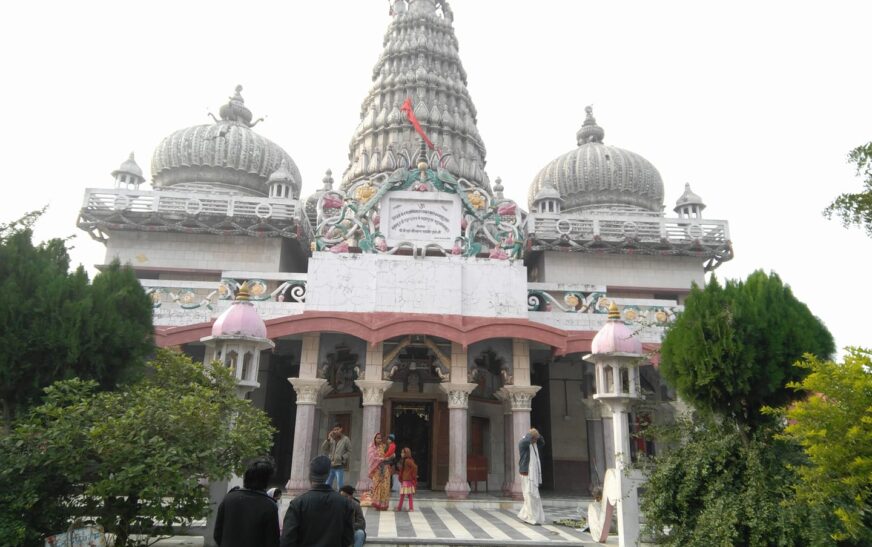
![Shiv Temple, Ghansoli, Navi Mumbai [Updated-2026]](https://traveloinfo.com/wp-content/uploads/2026/07/nerul.jpg)
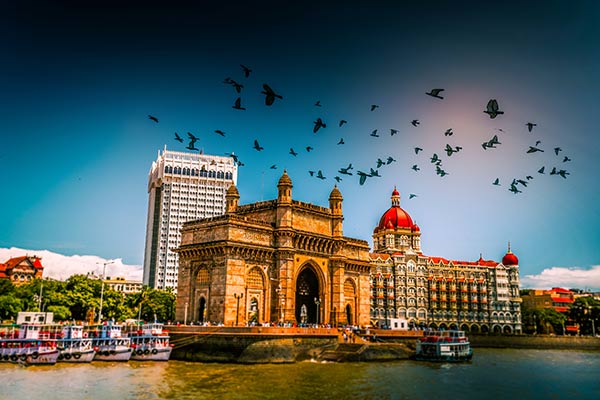
![Hanuman Temple, Kharghar [Updated-2026]](https://traveloinfo.com/wp-content/uploads/2026/07/HANUMAN.jpg)

![Bangalore, Karnataka City Guide: Where To Go, Stay, Eat, And shop in India’s best city. [Updated-2025]](https://traveloinfo.com/wp-content/uploads/2025/02/bangaloref.jpg)
![Hyderabad, Telangana City Guide: Where To Go, Stay, Eat, And shop in India’s best city. [Updated-2025]](https://traveloinfo.com/wp-content/uploads/2025/02/hydrabad1.jpg)
![Ahmedabad, Gujarat City Guide: Where To Go, Stay, Eat, And shop in India’s best city. [Updated-2025]](https://traveloinfo.com/wp-content/uploads/2025/02/ahemadabad1.jpg)